Category: NEWS
The 5 Most Beautiful Beaches in Puglia
From the white cliffs of the Gargano to the golden sands of Salento: five stretches of Puglia coastline where time seems to slow down.
Discover More

Journal · NEWS
Eating in Rome means discovering a cuisine that is rustic, straightforward and generous. Traditional recipes rely on a few recurring ingredients, pecorino cheese, guanciale, black pepper, offal and vegetables, combining them in dishes with bold, unmistakable flavours.
Carbonara is made with eggs, guanciale, pecorino cheese and black pepper. Its creamy texture does not require cream: it comes from emulsifying the egg with the cheese, the rendered fat from the guanciale and a small amount of pasta cooking water.
Amatriciana combines tomato, guanciale and pecorino cheese. Although it originated in Amatrice, it has become one of the culinary symbols of Rome.
Gricia, often considered the ancestor of amatriciana, leaves out the tomato and concentrates all its flavour in guanciale, pecorino cheese and black pepper.
Cacio e pepe is the simplest of the four: just pecorino cheese, black pepper and pasta cooking water, combined to create a rich, savoury and velvety sauce.
To try these dishes, look for a traditional trattoria in neighbourhoods such as Testaccio, Trastevere, Ostiense, Garbatella or Prati. Testaccio, in particular, is deeply connected to Rome’s working-class culinary traditions.
Coda alla vaccinara is one of the most representative dishes of Testaccio cuisine. Oxtail is slowly cooked with tomato, celery and herbs until the meat becomes exceptionally tender.
The name refers to the vaccinari, the slaughterhouse workers who once worked in the neighbourhood’s old abattoir. Part of their wages consisted of the so-called quinto quarto, or “fifth quarter”, meaning the less valuable parts of the animal.
Out of necessity, these humble cuts were transformed into deeply flavourful dishes that would later become classics of Roman cuisine.
Testaccio remains the best area in which to try oxtail and other quinto quarto specialities. One historic restaurant is Checchino dal 1887, located opposite the former slaughterhouse and known for its traditional Roman cooking.
Roman-style tripe is cooked in tomato sauce and finished with pecorino cheese and mentuccia, a local wild mint. The mint adds a fresh aroma that balances the strong character of the meat.
It was traditionally associated with Saturday lunch, as recalled by the old Roman saying:
“Thursday gnocchi, Friday fish, Saturday tripe.”
Once again, Testaccio is the main point of reference. Good options can also be found in the osterias of Garbatella and in the less touristy parts of Trastevere.
Saltimbocca are thin slices of veal topped with prosciutto and sage, quickly cooked in a pan and deglazed with white wine.
Their name suggests a bite so tempting that it “jumps into your mouth” on its own.
They have a relatively delicate flavour and are a good choice for anyone who wants to try a traditional Roman main course without venturing into offal or stronger flavours.
Saltimbocca are widely available in trattorias in the historic centre, especially around Campo de’ Fiori, the Pantheon and the Jewish Ghetto.
In Rome, artichokes are mainly prepared in two ways.
Carciofi alla romana are seasoned with garlic, wild mint and parsley, then slowly cooked until soft and tender.
Carciofi alla giudia, which originated in Roman-Jewish cuisine, are opened out like flowers and deep-fried until golden and crisp.
The most meaningful place to try carciofi alla giudia is the Jewish Ghetto.
Abbacchio is young lamb, a traditional speciality of the Lazio region. It can be roasted with potatoes, grilled or served alla scottadito: small lamb chops served piping hot and traditionally eaten with the hands.
Pajata, on the other hand, is a more adventurous speciality. It is traditionally made from the small intestine of a milk-fed calf, cooked in tomato sauce and often served with rigatoni.
It has an intense flavour and a distinctive creamy texture.
Both dishes are most commonly found in traditional trattorias in Testaccio.
Supplì is Rome’s most iconic street food: a breaded and fried rice croquette made with tomato sauce and filled with melted mozzarella.
Its full name, supplì al telefono, comes from the strand of mozzarella that connects the two halves when the croquette is pulled apart, resembling an old-fashioned telephone wire.
The classic version is made with meat sauce or tomato, although today you can also find variations inspired by carbonara, amatriciana and cacio e pepe.
Supplì can be found in pizza-by-the-slice shops and traditional fry shops throughout the city. Trastevere, Testaccio and the university district of San Lorenzo offer plenty of excellent options.
A maritozzo is a soft, sweet bun sliced through the middle and generously filled with whipped cream.
Tradition suggests that it should be eaten without worrying too much about elegance: getting cream on your nose is simply part of the experience.
The classic maritozzo can be found in pastry shops and cafés across many neighbourhoods, from Trastevere to Prati.
Category: NEWS
From the white cliffs of the Gargano to the golden sands of Salento: five stretches of Puglia coastline where time seems to slow down.
Discover MoreCategory: NEWS
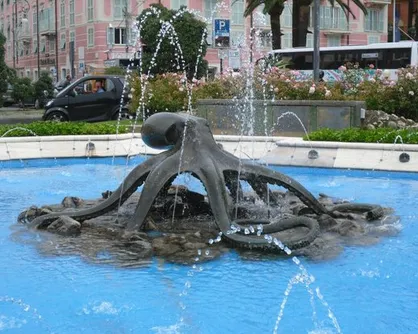
A small bronze landmark that became part of Rapallo’s everyday memory, and a favourite meeting point along the seafront.
Discover MoreCategory: NEWS
Sailing at dawn, cycling at sunset and via ferrata in between: Lake Garda has an outdoor adventure for every kind of traveller.
Discover More