Category: NEWS
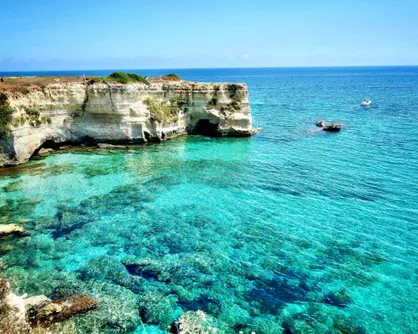
The 5 Most Beautiful Beaches in Puglia
From the white cliffs of the Gargano to the golden sands of Salento: five stretches of Puglia coastline where time seems to slow down.
Discover More
Journal · NEWS
Between rugged mountains, golden deserts and the waters of the Arabian Sea, Oman preserves a culture shaped by trade, travel and a strong connection with the land.
Frankincense has been collected in southern Oman for thousands of years.
The resin comes from the Boswellia sacra tree, which grows particularly well in the dry landscape of Dhofar. Small cuts are made in the bark, allowing drops of resin to emerge and gradually harden.
Once collected, the resin is burned to release its distinctive fragrance. In ancient times, Omani frankincense was transported along important trade routes towards the Mediterranean, India and Mesopotamia.
It was used during religious ceremonies, in traditional medicine and to perfume homes and clothing. Because of its value, it was sometimes considered as precious as gold.
Frankincense remains part of everyday life in Oman. Its unmistakable aroma can be found in homes, hotels and traditional souqs, where different qualities of resin are still sold.
Hospitality is a fundamental value in Omani culture.
Guests are often welcomed with kahwa, a lightly roasted coffee traditionally flavoured with cardamom. It is served in small cups and usually accompanied by dates, fruit or traditional sweets.
The host continues to refill the cup until the guest gently shakes it from side to side, indicating that they have had enough.
This simple gesture is part of a centuries-old tradition in which offering food and drink represents generosity, respect and friendship.
The khanjar is a traditional curved dagger worn by Omani men during weddings, festivals and official ceremonies.
It is normally carried in an elaborately decorated sheath attached to a belt. The handle and sheath may feature silverwork, leather and intricate geometric patterns.
Historically, the khanjar was both a practical object and a sign of identity and social status. Today, it is an important national emblem and appears on the coat of arms of Oman.
Although it is rarely used as a weapon, it continues to represent dignity, courage and respect for tradition.
In a country where water is scarce, Omani communities developed an ingenious system for carrying water from underground sources and mountain springs to villages, farms and date plantations.
These channels are known as aflaj, the plural of falaj.
Some sections run underground to protect the water from evaporation, while others cross villages in open channels. The distribution of water traditionally follows carefully organised schedules, ensuring that different families and farms receive their share.
Many of these systems are centuries old and remain in use today. Five Omani aflaj are included on the UNESCO World Heritage List.
Traditional Omani doors are often decorated with geometric patterns, floral designs and metal details.
In historic towns such as Nizwa, Sur and Bahla, they form one of the most distinctive features of old houses and forts. Some are made from heavy wood and fitted with rows of metal studs, while others feature delicate carved or painted decorations.
A door was not simply an entrance. Its size, materials and craftsmanship could reflect the importance and prosperity of the family living behind it.
Even today, traditional door designs continue to influence Omani architecture and decoration.
The traditional garment worn by Omani men is known as the dishdasha. It is a long, usually white robe designed to provide comfort in the country’s warm climate.
One of its most curious features is the small tassel positioned near the neckline, called the furakha. It may be lightly perfumed, allowing the fragrance to remain close to the wearer.
The dishdasha is often accompanied by an embroidered cap known as the kumma or by a wrapped turban called the massar.
Although styles and colours may vary, these garments remain an important and visible expression of Omani identity.
Category: NEWS
From the white cliffs of the Gargano to the golden sands of Salento: five stretches of Puglia coastline where time seems to slow down.
Discover MoreCategory: NEWS
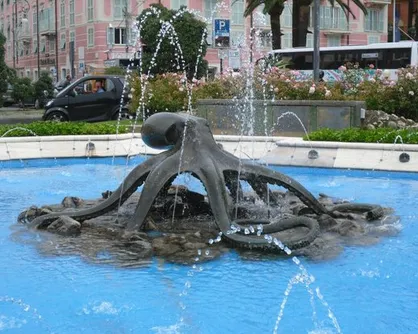
A small bronze landmark that became part of Rapallo’s everyday memory, and a favourite meeting point along the seafront.
Discover MoreCategory: NEWS
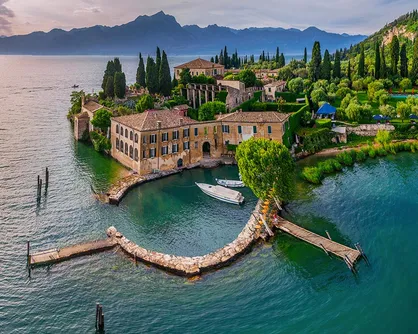
Sailing at dawn, cycling at sunset and via ferrata in between: Lake Garda has an outdoor adventure for every kind of traveller.
Discover More